Two extraordinary churches, breathtaking frescoes and centuries of history. Discover a side of Milan that even many Milanese have never explored.
Imagine returning from your trip to Milan and telling a Milanese friend about two extraordinary places you visited. Now imagine their surprise when they realise they've never even heard of them.
Sounds unlikely? Not in Milan.
Beyond the famous Duomo, the elegant shopping streets and the city's celebrated landmarks, there are hidden masterpieces that even many locals have never discovered.
Two remarkable churches, often compared to Rome's Sistine Chapel, conceal some of the most breathtaking frescoes in Milan.
One is just a short distance from the historic centre. The other lies in the city's northwest, far from the usual tourist trails.
And here's the best part: you might discover them before someone who's lived in Milan their entire life.
Ready to explore?
San Maurizio al Monastero Maggiore: The First Surprise
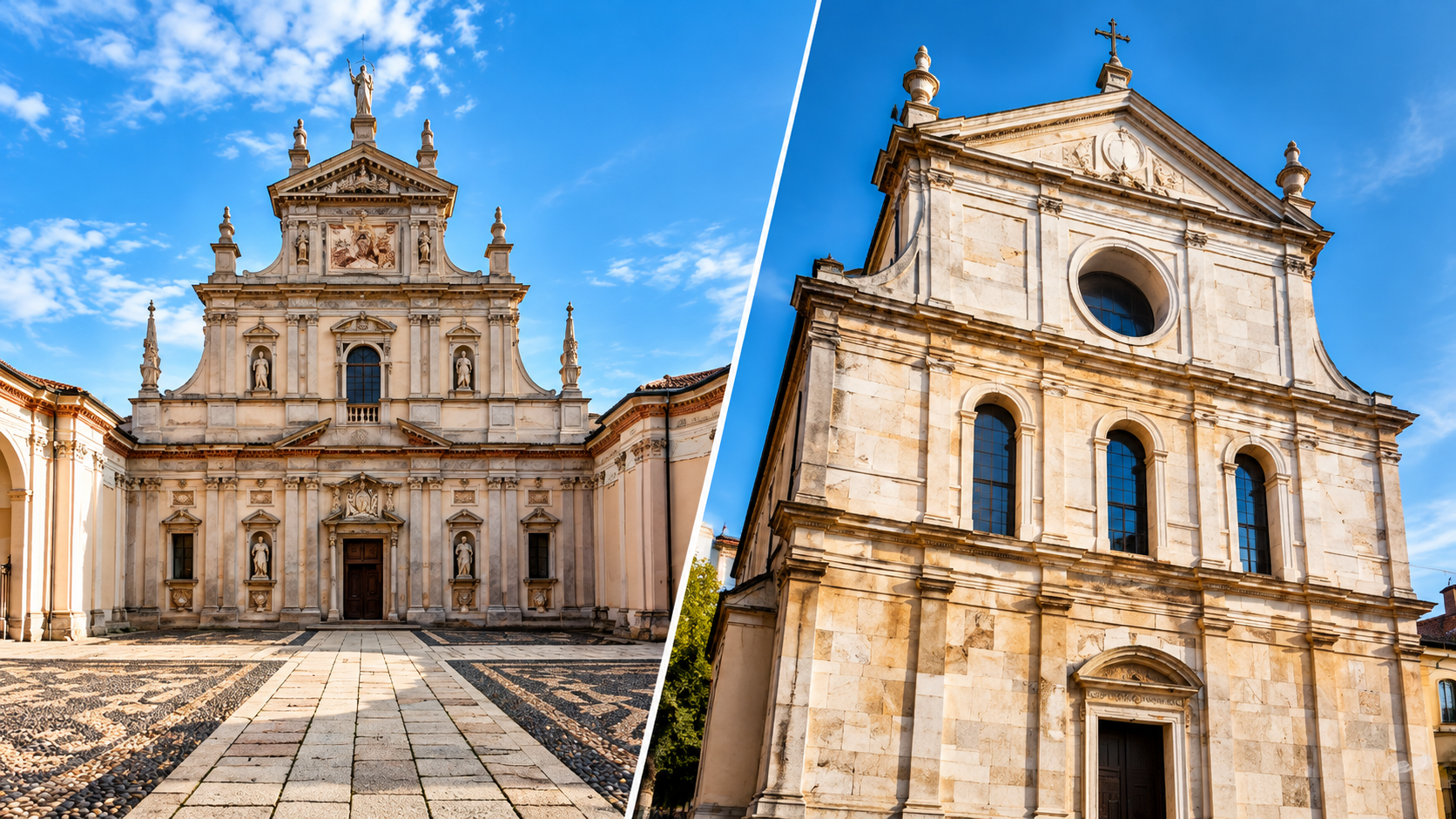
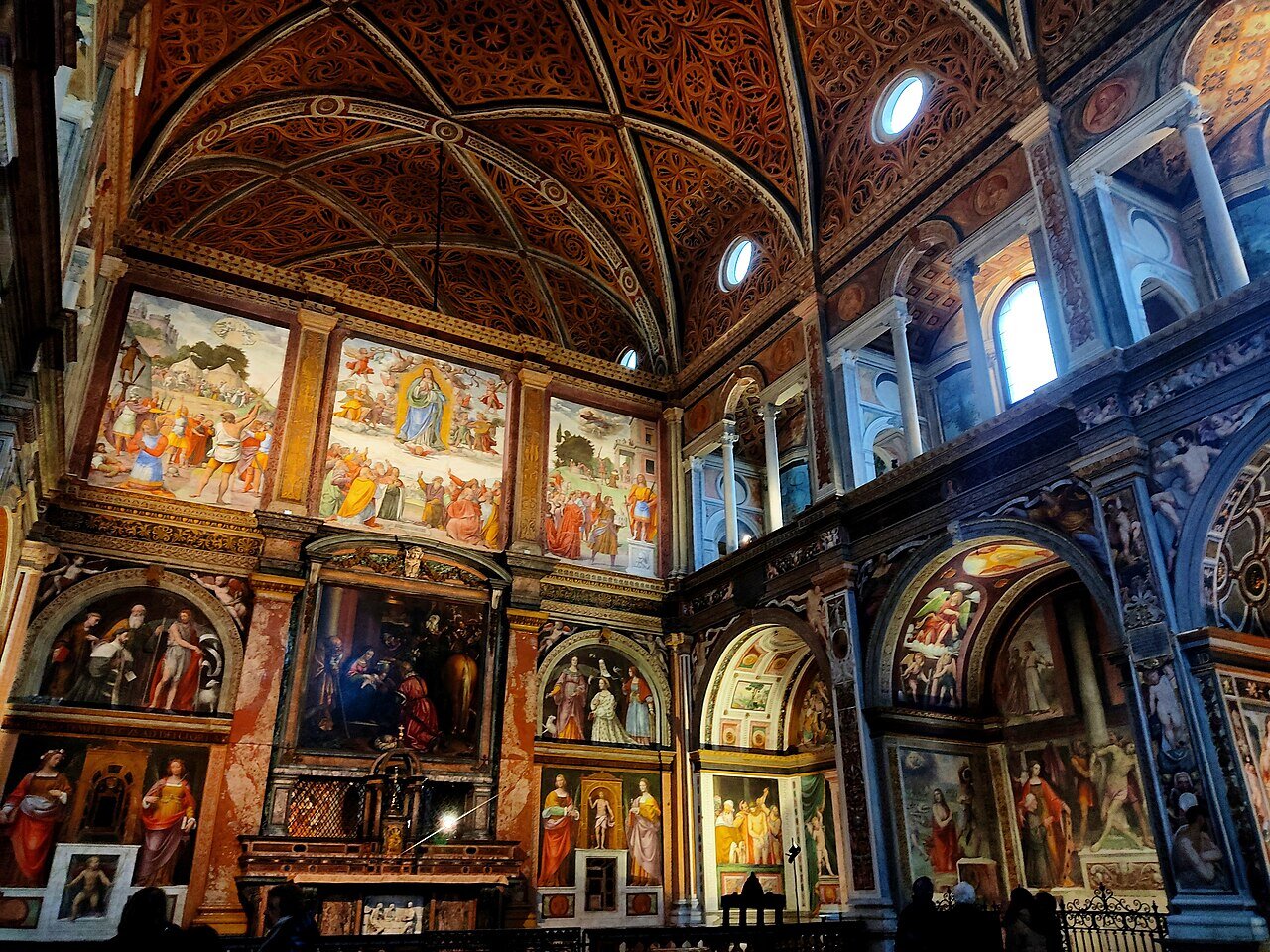
Walk along Corso Magenta, one of Milan's historic streets, and you might pass San Maurizio al Monastero Maggiore without giving it a second glance.
Its relatively modest exterior reveals almost nothing of the spectacle waiting inside.
But open the door and suddenly everything changes.
Walls, arches and ceilings disappear beneath an extraordinary collection of Renaissance frescoes. Biblical stories, saints and richly coloured scenes surround you in every direction.
It is easy to understand why San Maurizio has earned the nickname the Sistine Chapel of Milan.
The present church was begun in 1503 as part of the Monastero Maggiore, an important Benedictine convent.
Among the artists responsible for its magnificent decoration was Bernardino Luini, one of the leading painters of the Lombard Renaissance, whose style was deeply influenced by Leonardo da Vinci.
Yet perhaps the most fascinating detail is not immediately visible.
A Church with Two Separate Worlds
San Maurizio was originally divided into two distinct spaces.
One was intended for the public. The other belonged to the nuns, who lived in enclosure and could participate in religious services without mixing with visitors.
A dividing wall separated the two communities.
Today, visitors can admire the former nuns' choir, itself covered in remarkable paintings.
The result is almost like discovering a second hidden church inside the first.
And just when you think Milan cannot surprise you any further, there is another masterpiece waiting across the city.
Certosa di Garegnano: A Hidden Treasure in Northwest Milan
Leave the crowded centre behind and head towards Garegnano, in the northwestern part of Milan.
Here, surrounded by a city that has expanded dramatically over the centuries, stands the Certosa di Garegnano, also known as the Church of Santa Maria Assunta in Certosa.
Unlike San Maurizio, this extraordinary place is rarely included in traditional sightseeing itineraries.
And that is precisely what makes discovering it so rewarding. The story begins in 1349, when Giovanni Visconti, Archbishop and Lord of Milan, founded a Carthusian monastery in what was then open countryside.
The monks followed a life devoted to prayer, contemplation and solitude. Imagine the scene: fields stretching towards the horizon, quiet country roads and a religious community living far from the noise of medieval Milan. The city eventually grew around the monastery. Much of the original complex disappeared or was transformed.
But the church survived.
And what it preserves inside is nothing short of astonishing.
Look Up: The Story Is Written on the Ceiling
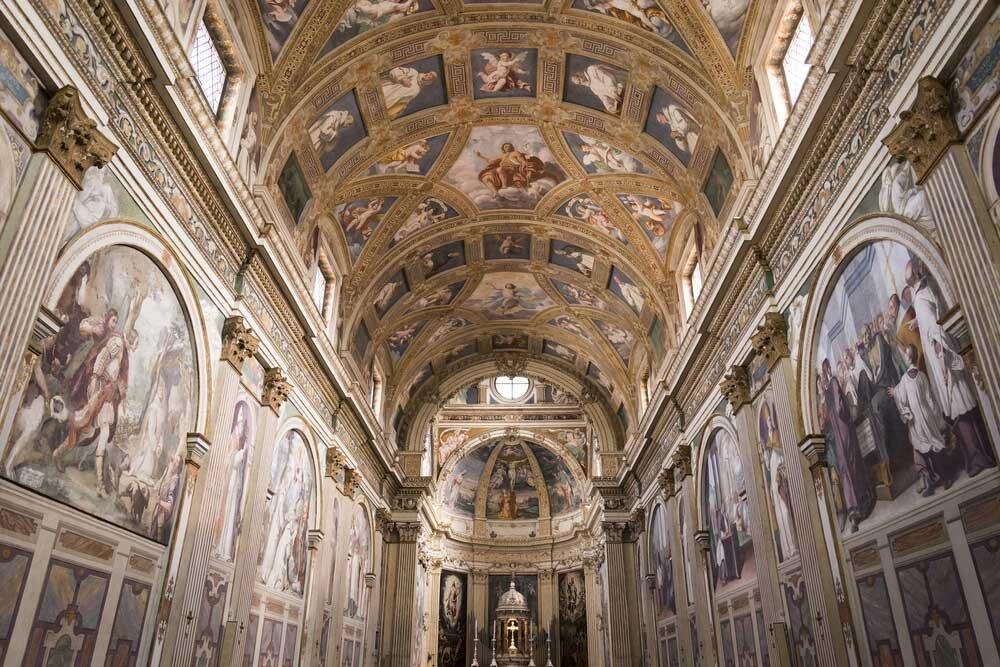
Step inside the Certosa and look towards the vaulted ceiling.
An extraordinary sequence of frescoes unfolds above you, painted by Daniele Crespi in the early seventeenth century and completed in 1629.
The paintings recount episodes from the life of Saint Bruno, founder of the Carthusian Order, transforming the church into an immense illustrated story.
Figures, dramatic scenes and architectural illusions create an atmosphere that feels almost theatrical.
It is this overwhelming richness of decoration that has inspired comparisons with the Sistine Chapel.
But the Certosa has another secret, and this one involves one of the most famous names in art history.
Before Caravaggio Became Caravaggio
Have you ever heard of Simone Peterzano? Perhaps not.
But you certainly know the name of his most famous pupil: Caravaggio.
Between 1578 and 1582, Peterzano worked on the decoration of the Certosa's presbytery, creating frescoes depicting scenes from the life of Christ. A few years later, in 1584, a young Michelangelo Merisi entered his workshop as an apprentice. That young painter would become Caravaggio, one of the most revolutionary artists of all time. Think about that for a moment.
You are standing inside a relatively little-known church in northwest Milan, looking at paintings created by the man who taught Caravaggio. It is exactly the kind of discovery that makes exploring beyond the obvious so fascinating.
Petrarch and the Medieval Certosa
The Certosa also has a connection with one of the greatest writers in Italian literature: Francesco Petrarca, known internationally as Petrarch. During his years in Milan in the fourteenth century, Petrarch came into contact with the monastery and its surroundings.
His connection with the Certosa offers a glimpse into a time when Garegnano was not a district of a major European city, but a quiet rural landscape. Centuries later, the monastery's setting has changed almost beyond recognition.
Yet its extraordinary artistic heritage remains.
Two Churches, Two Different Experiences
San Maurizio and the Certosa di Garegnano share an extraordinary richness of painted decoration, but they offer two very different experiences. At San Maurizio, the elegant language of the Renaissance creates an intimate world of delicate figures, biblical scenes and refined colors.
At Garegnano, the more dramatic art of the late Renaissance and early Baroque surrounds visitors with movement, emotion and monumental storytelling. One is relatively close to Milan's best-known attractions.
The other invites you to explore a part of the city that most tourists never reach. Together, they reveal something essential about Milan:
Some of its greatest treasures are not the ones everybody talks about.
One More Secret: The Impossible Perspective of San Satiro
And if you enjoy discovering places that surprise you the moment you step inside, Milan has another trick waiting. Near the Duomo stands Santa Maria presso San Satiro, where the Renaissance architect Donato Bramante created one of the most ingenious optical illusions in Italian architecture.
What appears to be a deep architectural space is actually an astonishing exercise in perspective.
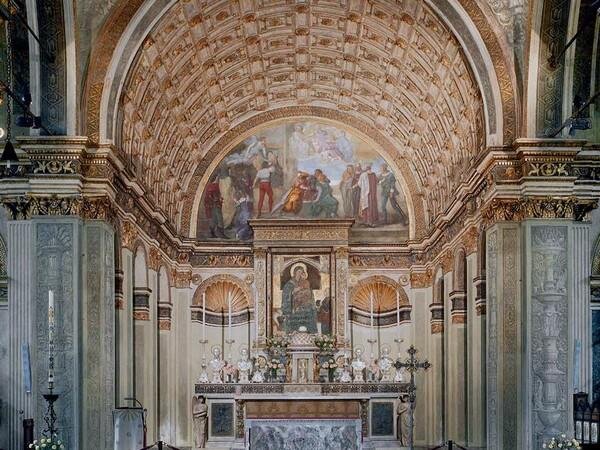
We have already explored this remarkable church in our article 9 Incredible Places to See Within 10 Minutes of Milan's Duomo.
Three churches. Three extraordinary surprises.
And three good reasons to look beyond Milan's most famous landmarks.
Discover a Milan That Even Locals Can Miss
There is something special about visiting a city and finding a place that was never on your original itinerary.
Not because it is famous. Not because everyone is talking about it, but because it makes you stop, look around and wonder how something so extraordinary could remain so little known.
San Maurizio and the Certosa di Garegnano offer exactly that experience.
And for those exploring northwest Milan, the Certosa is a particularly rewarding discovery, revealing centuries of history in an area more often associated with the city's industrial and urban transformation.
At Bovisa Hub 97 - Politecnico, we believe discovering Milan means going beyond the postcards, exploring its neighborhoods and finding the stories hidden in plain sight.
So when you return home, perhaps you will have something unexpected to tell your Milanese friends.
Something about their own city that they have yet to discover.
Plan Your Visit
San Maurizio al Monastero Maggiore
Corso Magenta 13, Milan. Located near the Civic Archaeological Museum and within walking distance of the historic centre.
For more information visit La chiesa S. Maurizio al Monastero Maggiore
Certosa di Garegnano
Via Garegnano 28, Milan. Located in northwest Milan, in the Garegnano district.
Both are active religious sites, so visiting hours may change during services or special events. Check current access information before your visit.
For more information about the Certosa, visit certosadimilano.com.