Most visitors come to Piazza del Duomo for the cathedral. They admire its extraordinary façade, walk through the Galleria Vittorio Emanuele II and then move on.
But within just a few minutes on foot, another Milan begins to appear.
Medieval squares, Renaissance optical illusions, extraordinary churches, Leonardo da Vinci, modern Italian art — and even the traces of a lake that disappeared more than 150 years ago.
If you are visiting Milan, don't leave Piazza del Duomo too quickly.
Here are 9 remarkable places you can discover within roughly a 10-minute walk of the cathedral.
1. Galleria Vittorio Emanuele II
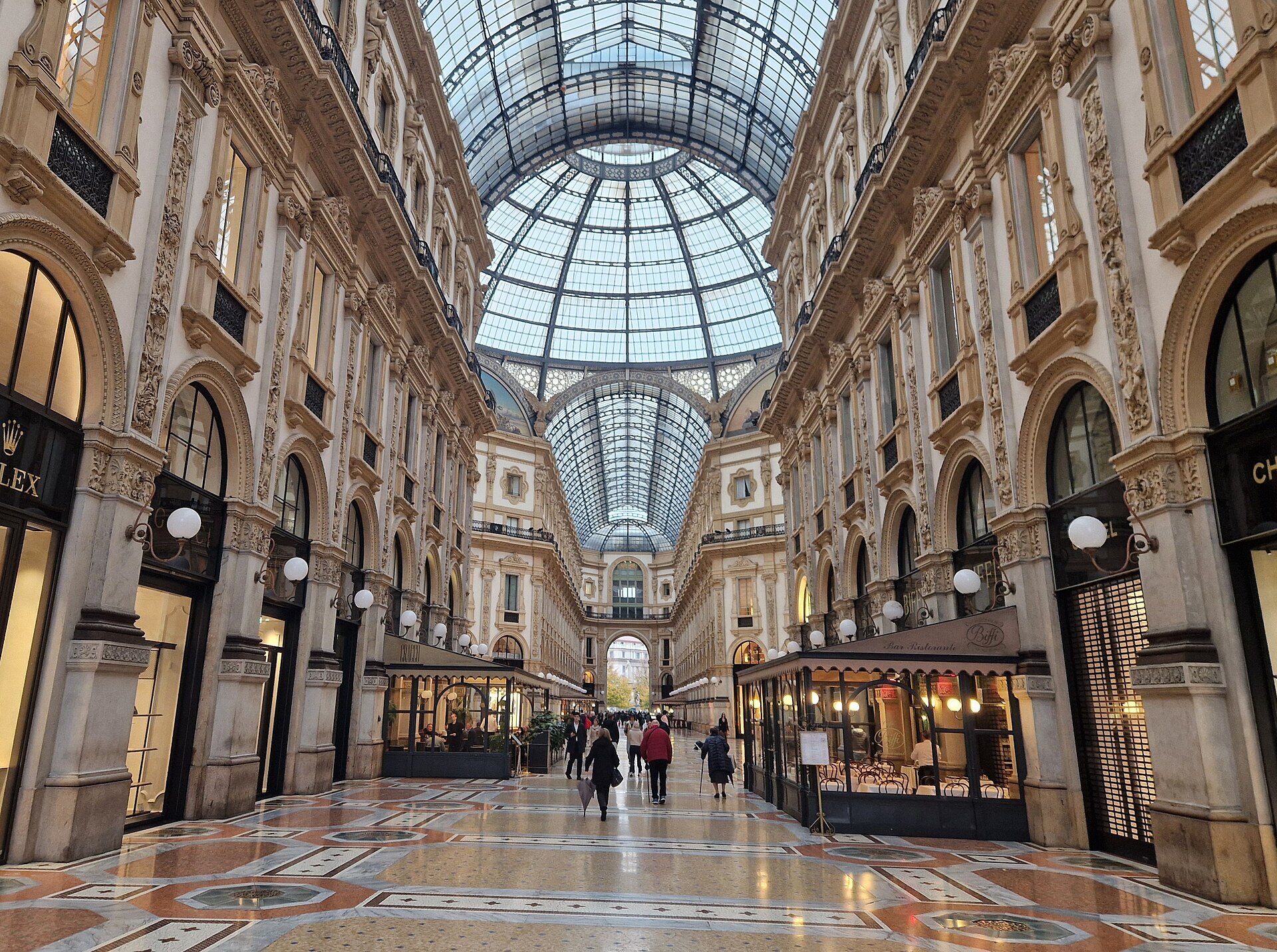
Walk directly from Piazza del Duomo into one of Europe's most spectacular covered galleries.
Look beyond the boutiques: the enormous glass-and-iron roof, the mosaics beneath your feet and the monumental octagonal space at its centre make the Galleria one of Milan's great architectural landmarks.
Walk through to the other side and another Milanese icon is waiting for you.
2. Teatro alla Scala
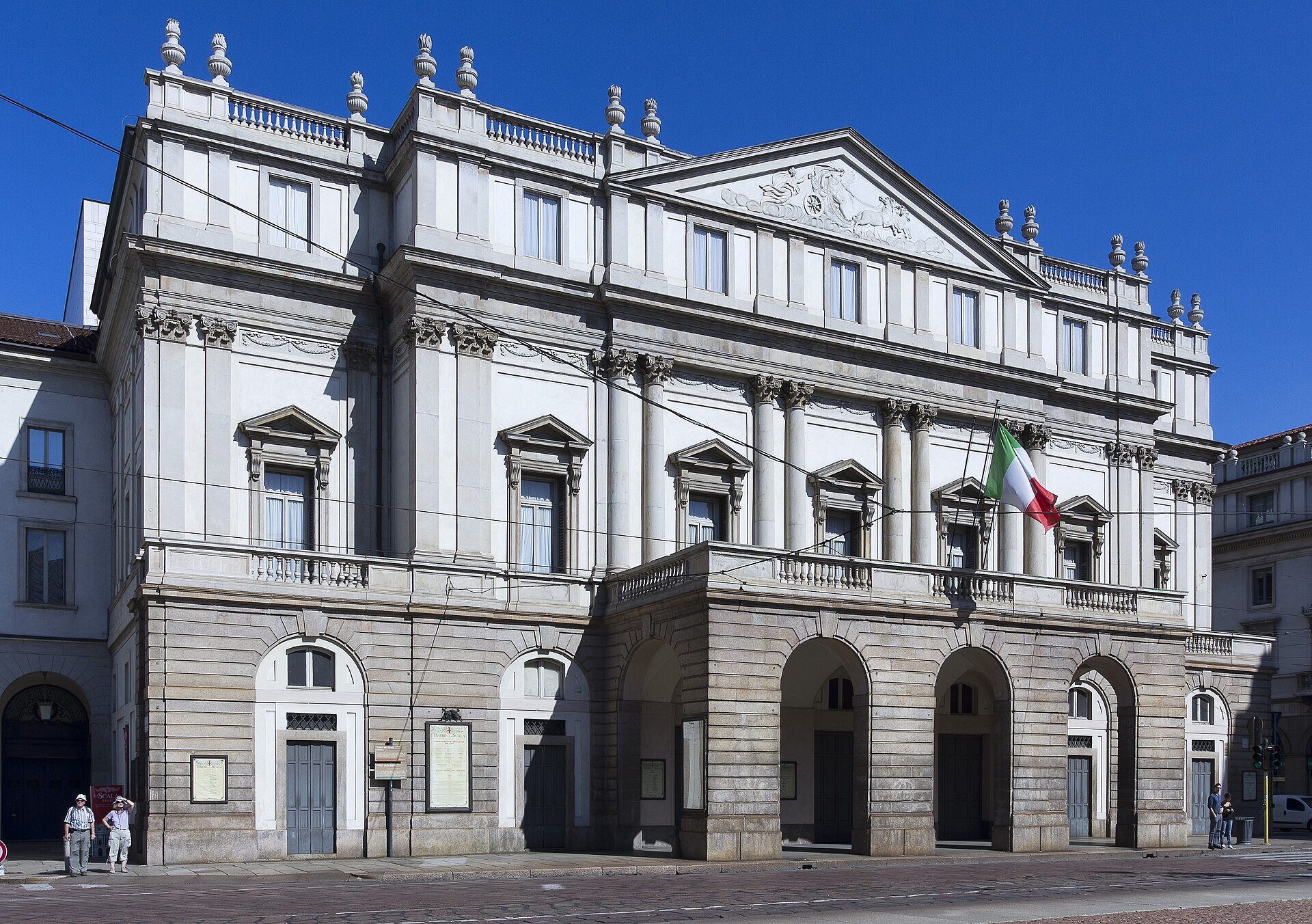
Cross the Galleria and you emerge almost directly in front of one of the world's most famous opera houses.
Designed by architect Giuseppe Piermarini and inaugurated in 1778, Teatro alla Scala stands on the site once occupied by the church of Santa Maria alla Scala, from which the theatre takes its name.
Its exterior is surprisingly restrained considering its international reputation, but behind that façade lies more than two centuries of music and theatre history.
Even if you don't attend a performance, Piazza della Scala is worth the short walk.
3. Museo del Novecento
Back in Piazza del Duomo, one of Milan's major museums is surprisingly easy to overlook.
Located inside the Palazzo dell'Arengario, the Museo del Novecento is dedicated primarily to Italian art of the 20th and 21st centuries, with more than 300 works on display selected from Milan's extensive civic collections.
There is another reason to enter: the museum's position overlooking Piazza del Duomo offers remarkable views towards the cathedral.

4. Palazzo Reale
Standing immediately beside the Duomo, Palazzo Reale has been connected with the government and history of Milan for centuries.
Today it is one of the city's most important exhibition venues, hosting major art exhibitions throughout the year.
Its programme constantly changes, making it worth checking what is on during your stay.
Even without visiting an exhibition, its courtyards are worth discovering while exploring the area around Piazza del Duomo.
.jpeg "piazza_mercanti_(milan).jpeg")
5. Piazza Mercanti
Walk for only a few minutes and modern Milan suddenly disappears.
Created in the Middle Ages as the centre of Milan's civic life, Piazza Mercanti became the heart of the city's administration, justice and commercial activity.
Its historic buildings and enclosed atmosphere feel remarkably different from the enormous open space of Piazza del Duomo just metres away.
And the square hides some extraordinary stories — including one of Milan's strangest medieval communication systems.
Discover the full story: Piazza Mercanti – The Medieval Milan Hidden Next to the Duomo
6. Santa Maria presso San Satiro
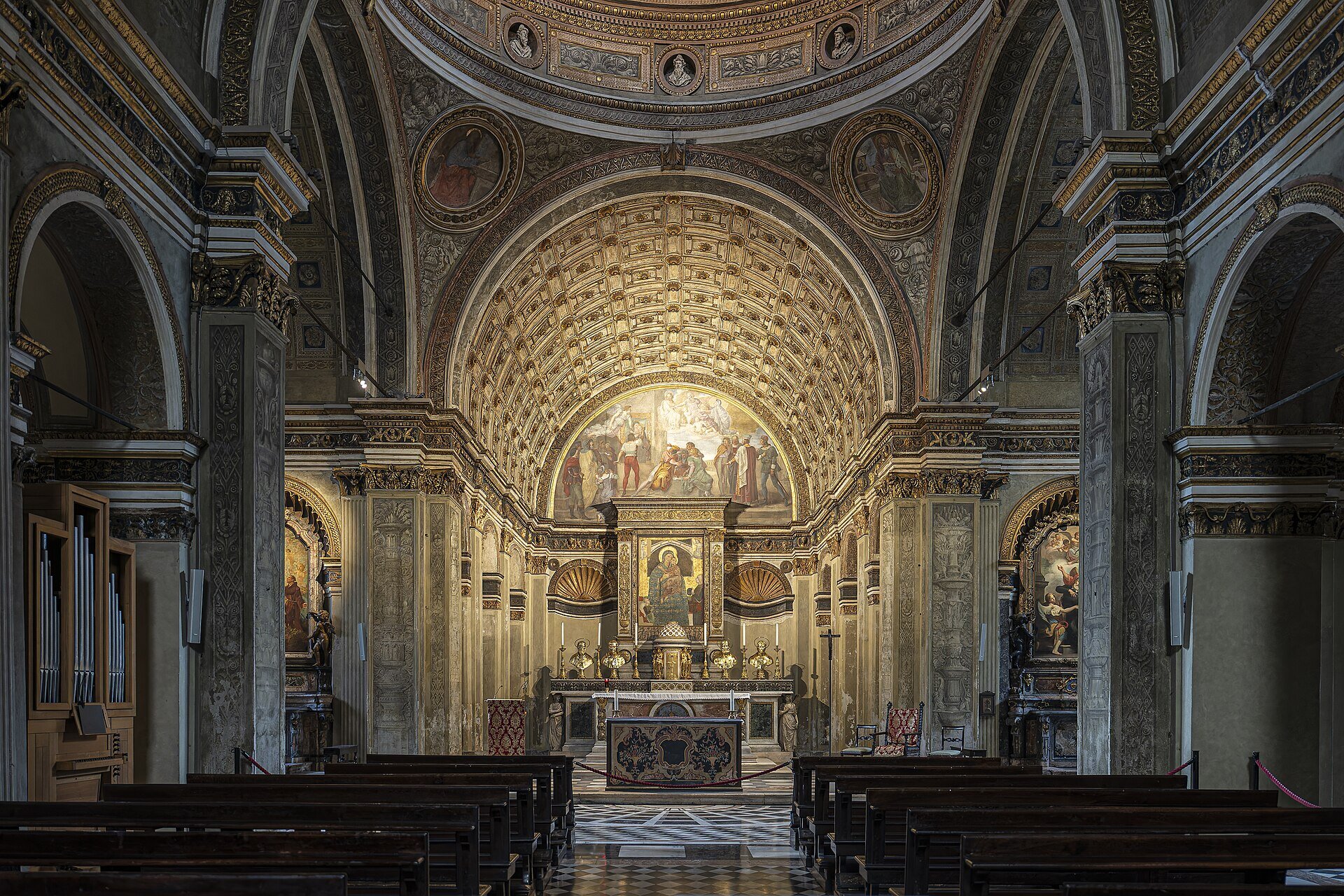
This small church just off Via Torino contains one of Milan's greatest architectural illusions.
Walk towards the altar and you appear to see a deep choir extending behind it.
But it doesn't.
There simply wasn't enough space to build one: a street immediately behind the church prevented the construction of a full choir.
The solution traditionally associated with Donato Bramante is extraordinary. Perspective, painted stucco and architectural elements create the illusion of a space almost ten metres deep.
In reality, it measures only 97 centimetres.
Stand in front of it, then move sideways.
The illusion suddenly disappears.
7. San Bernardino alle Ossa
A few minutes in the opposite direction takes you somewhere completely different.
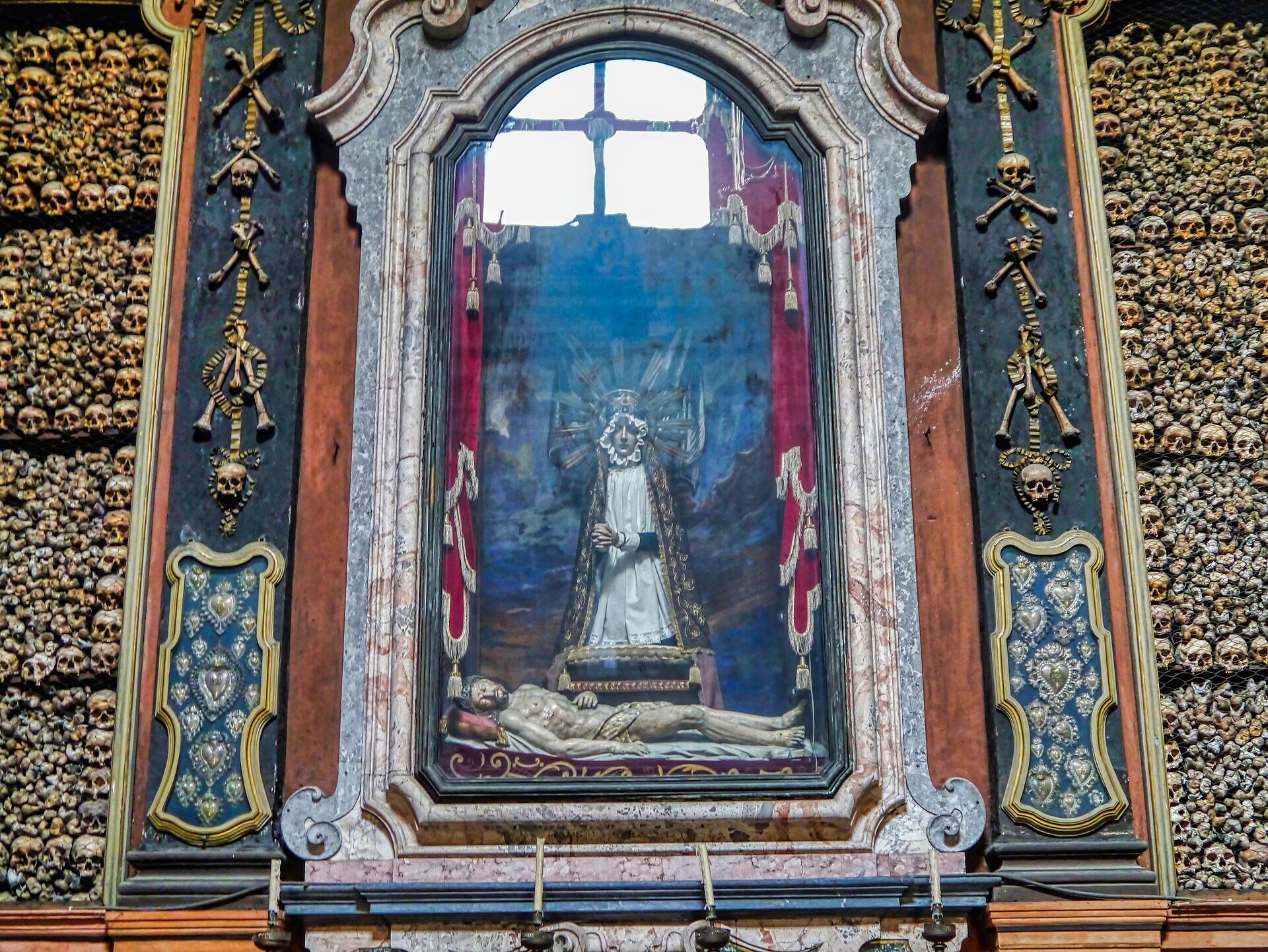
Beside the Basilica of Santo Stefano stands San Bernardino alle Ossa, famous for its extraordinary ossuary chapel.
The origins of the ossuary date back to the 13th century, when a chamber was built to hold bones from a nearby cemetery. After part of the complex was destroyed in the 17th century, the ossuary was rebuilt and completed in the form we essentially see today.
Its walls are decorated with human skulls and bones arranged in elaborate patterns.
Beautiful, unsettling and completely unexpected, it is one of those places that challenges the usual image of Milan as simply a city of fashion, shopping and design.
8. The Lost Lake of Santo Stefano
Just outside San Bernardino there is something even more surprising.
There used to be a lake here.
The Laghetto di Santo Stefano was created at the end of the 14th century as an inland landing place for barges navigating Milan's waterways.
Among their most important cargoes was the famous marble from Candoglia, transported towards the construction site of Milan Cathedral.
Imagine the scene: heavy blocks of pale marble arriving by water only a few hundred metres from the Duomo.
The lake remained part of Milan for centuries before being filled in in 1857, largely for sanitary reasons.
Today, the name Via Laghetto is one of the clues left behind by this vanished piece of Milan.
But the lost lake tells a much bigger story — one involving Lake Maggiore, the Navigli, the construction of the Duomo and the extraordinary network of waterways that once crossed Milan.
We'll return to that story soon.
9. Pinacoteca Ambrosiana
Finish with one of Milan's great cultural institutions.
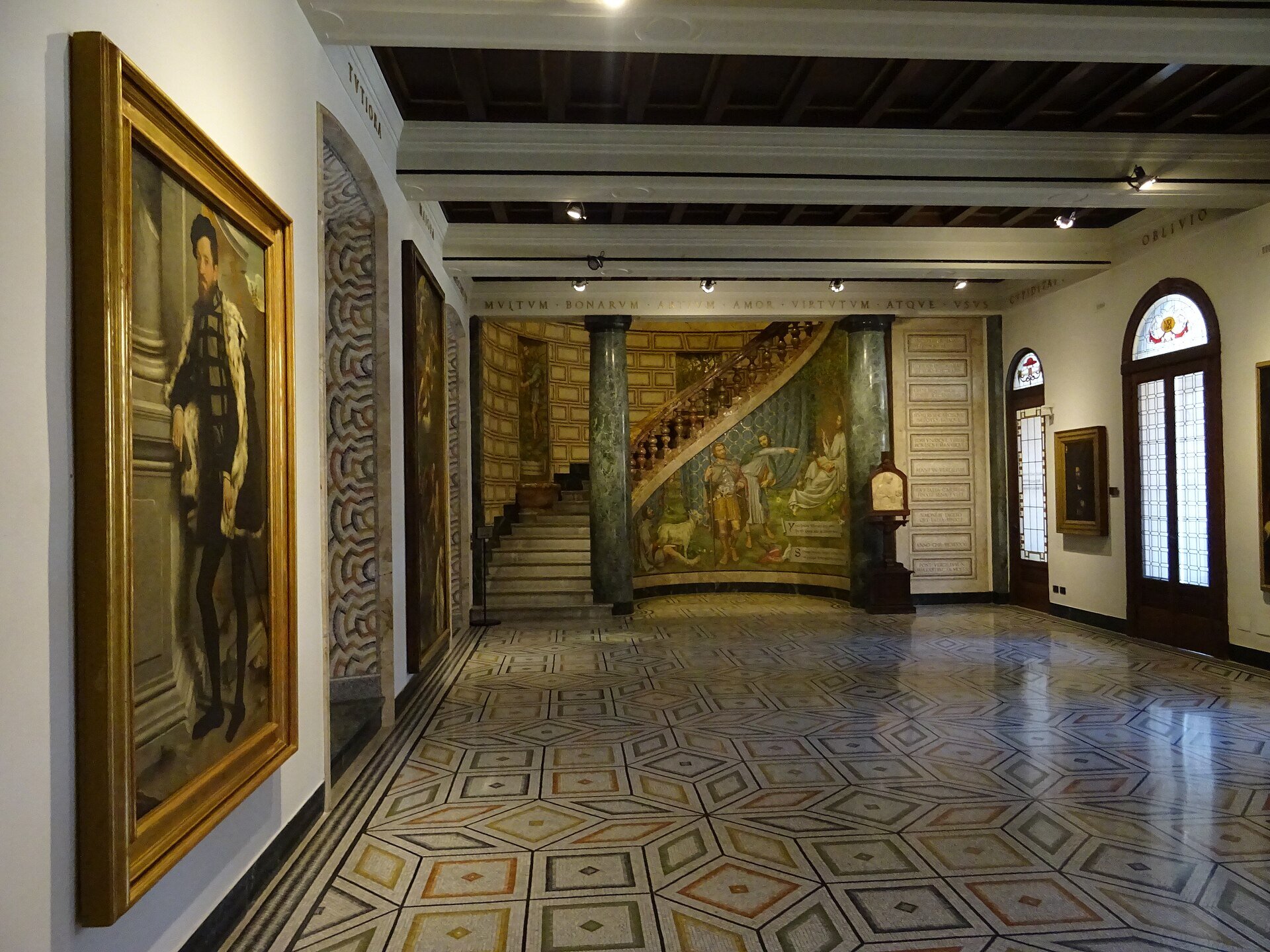
The Pinacoteca and Biblioteca Ambrosiana preserve an extraordinary collection of art, books and manuscripts, with a particularly important connection to Leonardo da Vinci.
The Biblioteca Ambrosiana holds the Codex Atlanticus, the largest existing collection of Leonardo's writings and drawings.
Its sheets explore an astonishing range of subjects: engineering, mechanics, architecture, mathematics, anatomy, water, machines and flight.
It is one of the places where the extraordinary breadth of Leonardo's curiosity becomes immediately apparent.
Don't Stop at the Duomo
What makes this part of Milan extraordinary isn't simply the number of monuments.
It's their concentration.
Within a few streets you can move from medieval Milan to Bramante's Renaissance, from Leonardo da Vinci to modern Italian art — and even discover that barges carrying marble once arrived by water almost at the doors of the cathedral.
The Duomo may be the reason you arrive in the square.
But it definitely shouldn't be the only thing you see before leaving.